Floral Number Seven: A Smart Brand Patch Choice
First Impression: Elegant, Friendly, and Distinctly Handmade
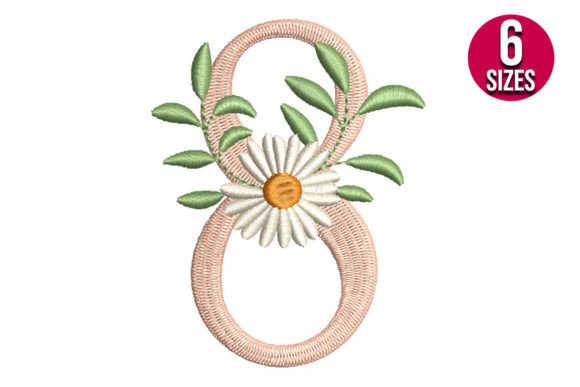
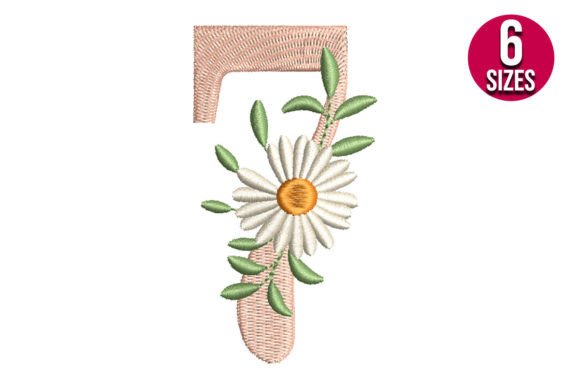
As an embroidery designer who’s digitized and stitched thousands of commercial projects—from café aprons to boutique tote bags—I immediately recognize Floral Number Seven as a design with quiet confidence. Its title signals both decorative charm and symbolic weight—“seven” evokes luck, completion, and craftsmanship; “floral” suggests organic softness and artisanal care. Though labeled under Wedding Monogram, this machine embroidery design transcends ceremony use. It reads as elegant but not stiff, playful but not childish, detailed but not fussy. That balance is rare—and vital—for small business merch.
Real-World Performance Across Business Touchpoints
Floral Number Seven shines where brand visibility meets tactile authenticity. On an embroidered patch for a local florist or bakery, its looping stems and balanced number shape communicate care without shouting. As a chest accent on staff uniforms—think linen aprons or cotton work shirts—it adds polish without competing with logos. For cap embroidery, it works beautifully at 2.5" wide when centered on the front panel, especially on structured twill or washed cotton caps. The floral elements provide natural visual rhythm, helping the number hold legibility even in motion.
On tote bag design, Floral Number Seven anchors the lower corner or side seam with subtle authority—ideal for craft studios or handmade product packaging accents. When stitched onto canvas or heavy-duty cotton, its moderate stitch density allows clean coverage without excessive bulk or stiffness. As a sleeve detail on custom apparel for a creative studio or pet brand, it becomes a signature whisper—not a slogan, but a marker of intention.
For Etsy sellers and handmade brands, this digital embroidery file supports cohesive storytelling. Pair it with minimalist typography or neutral thread colors (ivory, charcoal, sage) and it reinforces a premium, grounded aesthetic. In printable mockups, it scales cleanly across product variations—making client approvals faster and reducing revision rounds.
Where to Use It Thoughtfully
Like any strong design, Floral Number Seven has boundaries worth honoring. Avoid shrinking it below 1.75" for embroidered patches—delicate floral outlines may lose definition or stitch integrity on curved surfaces like cap fronts or rounded tote handles. On textured fabric (burlap, slubbed linen, or heavily brushed fleece), test stitch density first: too many fine fills can sink into the nap or cause puckering.
Dark uniforms demand careful thread color selection. While the design’s structure holds up well, low-contrast combos (e.g., light tan thread on charcoal twill) risk diminishing impact. Likewise, high-frequency washing—common for café aprons or daycare staff gear—requires secure underlay and appropriate stabilizer to prevent fraying over time. Always verify whether the embroidery file includes optimized underlay for stretch or lightweight fabrics before committing to production runs.
Brand Identity Impact: More Than Just Decoration
When small businesses choose Floral Number Seven, they’re not just adding ornament—they’re shaping perception. Its refined floral framing elevates perceived product value, especially alongside handmade goods or locally sourced items. Customers subconsciously associate thoughtful details like this with care, consistency, and professionalism. Used consistently across apron embroidery, cap embroidery, and tote bag design, it builds visual recognition—even without a wordmark.
That consistency strengthens brand identity across touchpoints: a customer sees it on your barista’s sleeve, then on your reusable tote at checkout, then on a limited-edition product label—and begins to trust the cohesion behind your offering. For crafters and Etsy sellers, it signals that you invest in quality execution—not just concept. That builds buyer engagement and repeat loyalty far more effectively than generic clip art ever could.
Practical Designer Notes for Commercial Embroidery
Before launching Floral Number Seven into production, here’s what I always do:
- Test in black and white first—to assess contrast, spacing, and negative space balance without color distraction;
- Check minimum viable size—stitch a 1.75" version on scrap fabric matching your end-use material;
- Review thread color contrast against your base fabric swatches—not just on screen;
- Inspect letter and stem spacing—tight loops or narrow gaps may need manual cleanup for dense stitching;
- Confirm hoop size compatibility—especially if layering with other design assets;
- Test on real fabric with correct stabilizer—cutaway for knits, tear-away for stable wovens, fusible for lightweight linens;
- Create a physical or digital mockup for client approval before bulk stitching;
- Compare beside existing design assets—does it harmonize with your logo, typography, and packaging palette?
- Verify commercial licensing—since this is intended for small business merch and branded patch use, confirm the embroidery file permits resale, distribution, and derivative branding applications.
Remember: “high-quality embroidery design that can be sewn onto any fabric you choose” is only as reliable as your prep. The phrase “comes with multiple” suggests format versatility—but always double-check supported file types (DST, PES, JEF, etc.) and whether color-separation instructions are included for multi-hue runs.
Final Thought: A Quiet Anchor for Intentional Brands
Floral Number Seven isn’t flashy—but it doesn’t need to be. In a market saturated with loud, algorithm-optimized graphics, its restrained elegance makes it a standout asset for small businesses building real connection. Whether you’re embroidering patches for a neighborhood bookstore, personalizing aprons for a ceramic studio, or adding subtle distinction to wholesale product tags, this design delivers quiet authority. It supports your story instead of overshadowing it—and that’s exactly what thoughtful, scalable brand embroidery should do.