Floral Bee Clipart Faux Embroidery
A Designer’s First Look: Whimsy, Warmth, and Wearable Charm
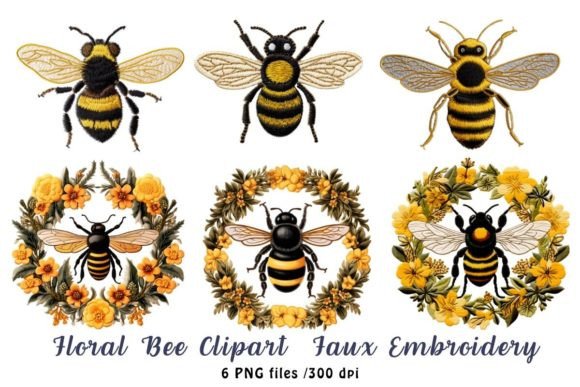
As an embroidery designer who’s stitched hundreds of boutique apparel collections—from linen tees for slow-fashion labels to cozy fleece hoodies for seasonal Etsy drops—I opened the Floral Bee Clipart Faux Embroidery bundle with quiet curiosity. What I found wasn’t just clipart—it was a mood: soft watercolor texture layered with botanical precision and gentle movement. Six cohesive elements—bees mid-flight, blooming sprigs, delicate stems, and subtle honeycomb accents—each rendered at high resolution with intentional negative space and organic edge variation. This isn’t bold streetwear graphics or minimalist monograms. It’s playful femininity with quiet confidence—think cottagecore meets modern craft, ideal for small shops building a warm, intentional brand voice.
How It Translates to Real Apparel Projects
Before digitizing or printing, I held each element up against fabric swatches: oatmeal French terry, heather grey fleece, blush loopback cotton, and deep navy denim. The Floral Bee Clipart Faux Embroidery holds its character across textures. On neutral sweatshirts, it reads as hand-painted charm—not flat or digital. On pastel hoodies, the watercolor softness enhances the dreamy tone without washing out. Against dark garments, the contrast works beautifully if paired with light thread or printed with opaque sublimation inks. And yes—it scales gracefully for oversized silhouettes: a single bee + stem looks balanced on a back panel, while grouped elements create gentle rhythm on chest placement.
Sweatshirt & Hoodie Design Notes
- Chest placement: Ideal for small-to-medium hoop sizes (4”–5”). The designs avoid tight clusters—no over-stitching risk on ribbed cuffs or curved yokes.
- Sleeve accents: A single bee or floral bud fits perfectly above the elbow on relaxed-fit hoodies—adds detail without bulk.
- Back panels: Layer two or three elements with breathing room; the natural flow of the illustrations prevents visual crowding.
- Fleece & stretch fabrics: Because this is faux embroidery clipart, not a dense machine embroidery design, it avoids stitch density pitfalls—but still benefits from lightweight stabilizer if heat-transfer printed or embroidered via digitized conversion.
T-Shirts, Denim, Totes & Lifestyle Use
The Floral Bee Clipart Faux Embroidery shines where authenticity meets approachability. On classic crewnecks, it feels handmade—not mass-produced. On denim jackets, the watercolor texture softens the rigidity of the fabric. For tote bags, it scales cleanly without pixelation (thanks to high-res vector-ready files). As Illustrations, these elements also elevate printable mockups: imagine your Etsy listing showing the same bee motif on a hoodie, a tea towel, and a greeting card—all tied together by consistent visual language. That cohesion builds buyer trust fast.
Where to Use It Thoughtfully
This isn’t one-size-fits-all clipart. Its strength lies in intentionality. Avoid cramming all six elements into a tiny chest patch—let them breathe. Skip ultra-dense stitch areas unless you’re converting to true machine embroidery and verifying stitch count and underlay. On highly stretchy knits or curved seams (like shoulder seams), test placement first: the organic lines hold up better than rigid geometric graphics, but still need mindful alignment. And on ribbed fabric? Opt for chest or upper-back zones—not waistbands or cuffs where distortion could blur the delicate watercolor edges.
Impact Beyond the Stitch
For a small shop owner or Etsy seller, the Floral Bee Clipart Faux Embroidery does more than decorate—it signals care. Customers scrolling through lifestyle photos notice the softness, the balance, the *intention*. That translates directly to perceived value: a $68 hoodie with this motif feels curated, not generic. It strengthens brand identity when used consistently across product types (e.g., matching bee motifs on sweatshirts, tote bags, and packaging stickers). And because it’s versatile across print methods—sublimation, DTG, heat transfer, or digitized embroidery—it supports scalable production without sacrificing aesthetic integrity.
Practical Designer Reminders Before You Launch
- Always test on scrap fabric—especially if printing on darks or using heat-sensitive transfers.
- Confirm stabilizer choice if converting to machine embroidery: lightweight cutaway works best for knits; tear-away suffices for stable wovens.
- Review thread color contrast—soft peach or sage green threads echo the watercolor palette beautifully on light fabrics; white or cream pops cleanly on darks.
- Check hoop size compatibility before digitizing—some elements may need slight repositioning for smaller hoops.
- Inspect stitch density if working with a digitizer—avoid overloading fine stems with unnecessary fill stitches.
- Test on your actual garment fabric, not just cotton test swatches—fleece nap and terry loops interact differently with ink and thread.
- Compare placement options using printable mockups—small chest vs. sleeve vs. back changes how customers experience the design.
- Verify licensing details on Creative Fabrica before selling finished apparel—this is a Graphics bundle intended for commercial use, but always confirm permitted use cases for your specific business model.
Bottom line? The Floral Bee Clipart Faux Embroidery isn’t flashy—but it’s thoughtful, adaptable, and quietly memorable. For boutique brands building a cohesive, heartfelt aesthetic across custom apparel, it’s less of a “clipart add-on” and more of a foundational visual ingredient. Used with care, it helps turn a simple sweatshirt into a signature piece—and that’s exactly what handmade product storytelling is all about.