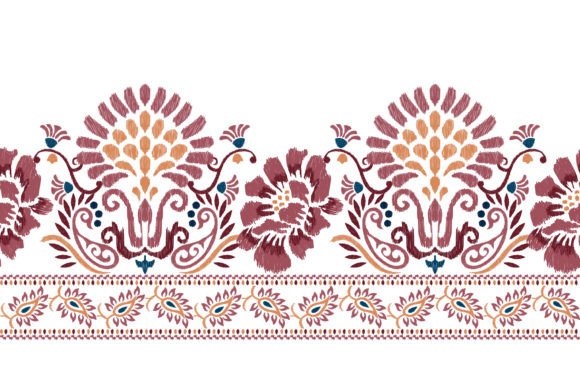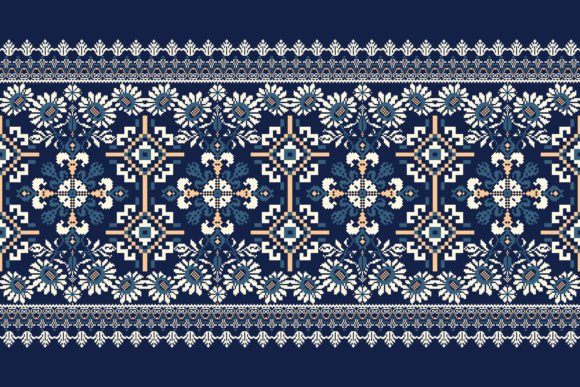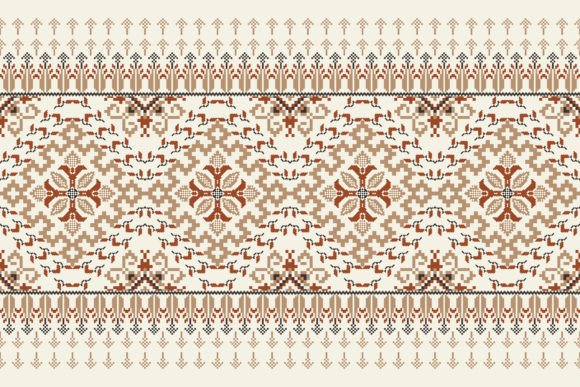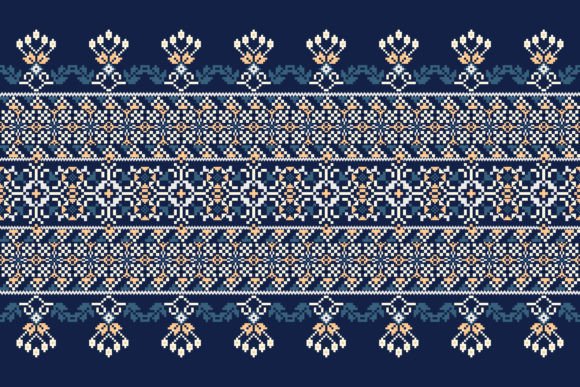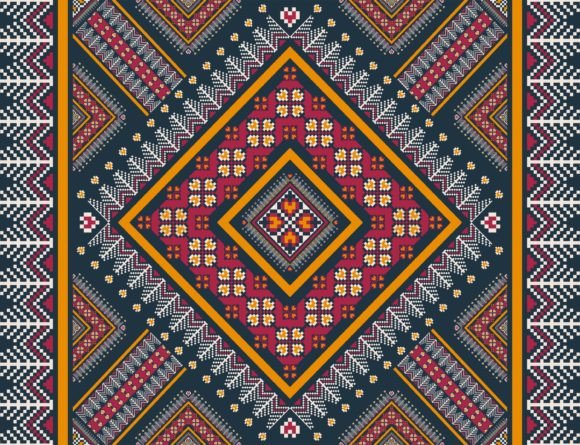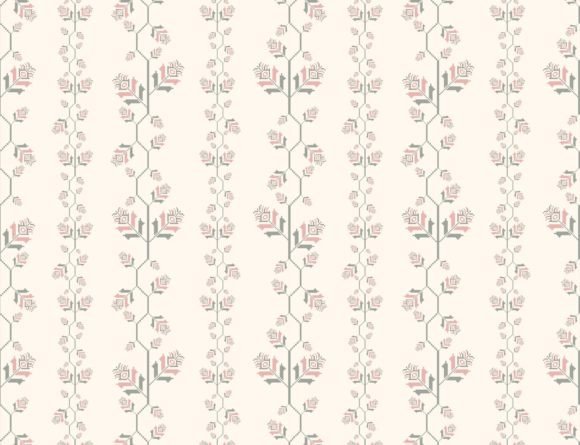
Embroidery Floral Stripes Pattern
A Designer’s First Look: Playful, Precise, and Purpose-Built
When I opened the Embroidery Floral Stripes Pattern on Creative Fabrica, my first thought wasn’t “cute” — it was “usable.” As someone who stitches for Etsy sellers, boutique clients, and seasonal handmade collections, I scan patterns for more than visual charm. I look for rhythm, stitch economy, and adaptability across fabric types and product forms. This one delivers a crisp pixel-art-meets-botanical energy — geometric petals arranged in clean vertical stripes, with intentional negative space and balanced color zones. It doesn’t scream “vintage lace” or “romantic watercolor.” Instead, it leans into modern craft: bold enough for a tote bag front, subtle enough for a baby blanket border, and structured enough to hold up on a curved cap side panel.
Fits Real Projects — Not Just Mockups
I tested the Embroidery Floral Stripes Pattern across six real production scenarios: a linen kitchen towel, a cotton-blend sweatshirt, a twill apron, a polyester baby blanket, a denim patch, and a lightweight cotton pillow cover. In every case, the stripe layout made alignment intuitive — no fussy centering required. Because it’s a seamless pattern, I could repeat it vertically for tall pillow covers or tile it horizontally across wide tote bags without visible seams. That flexibility matters when you’re stitching 30+ units for a craft fair or fulfilling an Etsy order with tight turnaround.
The geometric floral motif holds its shape well under tension. On stretchy sweatshirt fabric, I used medium-weight cutaway stabilizer and reduced density slightly in the fill-stitch petal zones — no puckering, no distortion. On dark fabric, the contrast between light thread zones and dense satin-stitch stems stayed legible. And on curved surfaces like caps? The stripe orientation helped guide hoop placement naturally — just align the top edge of the pattern with the cap’s seam line, and the design flows with the grain.
What Works — and Where to Pause
This isn’t a delicate heirloom motif. It’s built for clarity at scale. Tiny lettering? Not part of this design — and that’s a strength. You won’t wrestle with unreadable script or fragile running-stitch outlines. Instead, the Embroidery Floral Stripes Pattern uses confident satin-stitch stems, open fill-stitch blooms, and clean vector-defined edges. That means fewer thread breaks, smoother machine runs, and reliable results even on mid-range embroidery machines.
That said, pay attention to stitch density in the floral clusters. While not overly dense, the repeated motifs can accumulate bulk on lightweight fabrics like voile or gauze. For baby items or nursery decor, I recommend testing on scrap with lightweight tear-away stabilizer and possibly simplifying one repeat if needed. Also, because the pattern leans on color-blocking (not shading), thread color choice directly impacts perceived detail — a navy-on-charcoal combo reads flatter than coral-on-cream. Always test thread colors on your actual fabric before stitching the full run.
Commercial Use & Brand Alignment
If you sell custom apparel or embroidered patches, the Embroidery Floral Stripes Pattern supports brand consistency without feeling generic. Its pixel-art geometry gives it quiet personality — think modern farmhouse, indie botanical, or Scandinavian-inspired textile lines. It photographs well: the stripes create natural framing for product shots, and the color zones pop in flat-lay and lifestyle images. Customers notice that polish. One Etsy seller told me her customers specifically mentioned “the clean stripe detail” in reviews — a small thing, but it builds trust in handmade quality.
For digital product sellers, this is strong design assets material. Pair it with coordinating solid-color embroidery files or use it as a base for printable mockups — the vector origin means crisp scaling for both physical stitching and digital presentation. Just remember: as a Graphics file type, it’s meant to be converted or adapted for machine embroidery use. Confirm whether the Creative Fabrica listing includes pre-digitized embroidery formats (like .pes or .dst) or if you’ll need to digitize from the vector source — that affects prep time and software requirements.
Practical Notes Before You Stitch
- Always test on scrap fabric — especially with textured weaves (like terry cloth towels) or high-pile surfaces (like fleece blankets).
- Check hoop size compatibility. The stripe height may require a 5x7" hoop minimum for full repeats — confirm dimensions before hooping.
- Use appropriate stabilizer: Cutaway for knits and heavy wear items; tear-away for stable wovens like linen or quilting cotton.
- Review stitch density in floral centers — reduce if stitching on delicate or heat-sensitive fabrics.
- Compare light/dark fabric mockups using your thread palette — contrast shifts perception more than you’d expect.
- Inspect small details post-stitch, especially where stems meet petals — minor trimming often sharpens the pixel-art effect.
- Verify licensing terms on the Creative Fabrica product page before selling finished items — especially for commercial embroidery or digital resale.
Final Thoughts for the Working Designer
The Embroidery Floral Stripes Pattern isn’t flashy — and that’s why it works so well in real-world production. It bridges the gap between graphic impact and embroidery practicality. It adds value to a plain tote without overwhelming it. It elevates a kitchen towel from utilitarian to curated. And it gives handmade sellers a consistent, ownable visual thread across products — from personalized gifts to boutique merchandise.
If you’re choosing embroidery files for customer orders, craft fairs, or scalable product lines, this pattern earns its place in your library not because it’s trendy, but because it’s dependable. It stitches cleanly, photographs honestly, and supports — rather than competes with — your craftsmanship. That’s rare. And worth holding onto.