Floral Cross Stitch Pattern Vector
A Designer’s Real-World Review for Small Business Merchandise
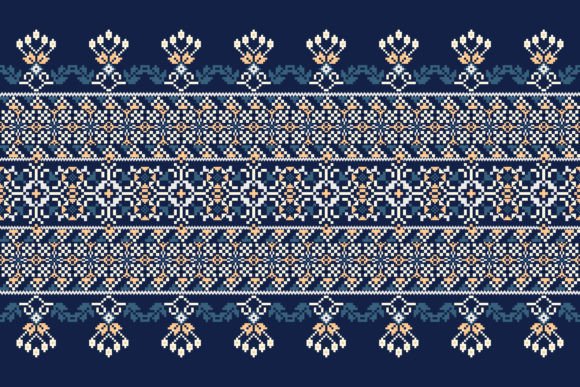
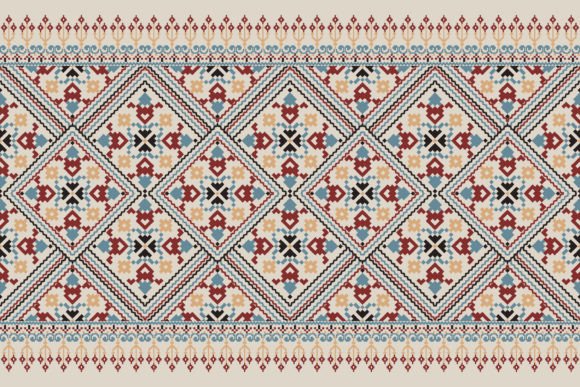
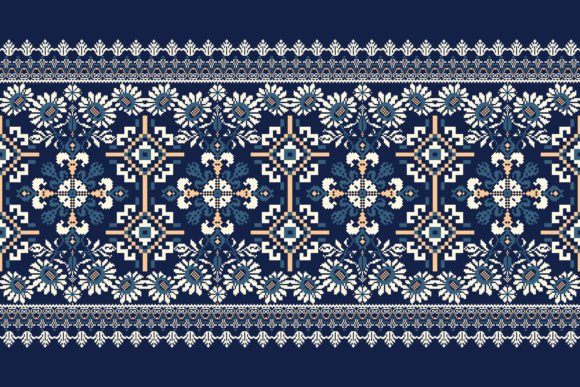
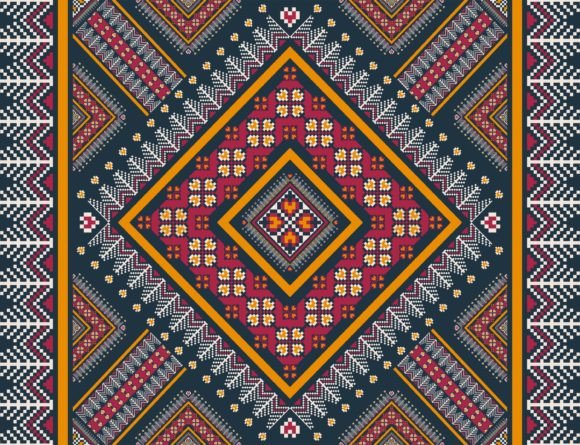
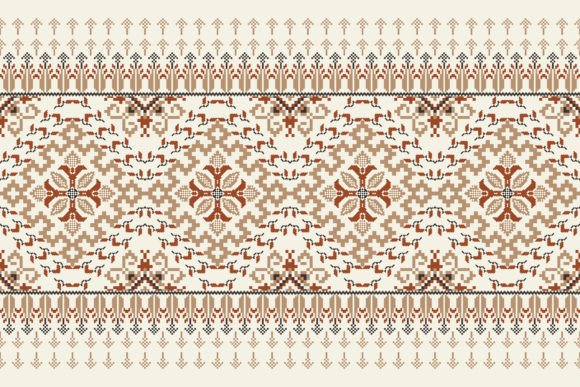
As an embroidery designer who’s digitized over 2,000 commercial projects—from café aprons to boutique tote bags—I approached the Floral Cross Stitch Pattern Vector with both curiosity and caution. The title and description—“Floral Cross Stitch Embroidery on white background. geometric ethnic oriental pattern traditional. Aztec style abstract vector illustration. design for texture, fabric, clothing, wrapping, decoration, sarong”—immediately signal a hybrid aesthetic: handcrafted charm meets bold, structured geometry. For small business owners, this isn’t just a decorative motif—it’s a potential brand signature. So how does it hold up when stitched onto real-world merchandise? Let’s break it down.
First Impression: Handmade Warmth Meets Cultural Confidence
The Floral Cross Stitch Pattern Vector reads as elegant yet grounded, traditional but not dated. Its Aztec-inspired geometry adds visual weight and cultural resonance, while the floral motifs soften its edge—making it ideal for businesses that want authenticity without austerity. Think: a florist’s embroidered sleeve detail, a handmade soap brand’s patch on linen packaging, or a local bakery’s apron border. It feels premium because of its balanced symmetry and intentional negative space—not flashy, but confidently crafted. That matters: customers associate thoughtful pattern language with care, consistency, and intentionality.
Where It Shines in Commercial Embroidery
This Floral Cross Stitch Pattern Vector excels where many ornamental patterns fail—in scalable, repeatable, brand-aligned applications:
- Embroidered patches: Works beautifully as a 2.5"–3.5" chest or sleeve patch for staff uniforms. Its clear geometric framework holds stitch integrity even at moderate sizes.
- Apron embroidery: Ideal as a corner motif or waistband accent—its rhythm complements fabric drape without overwhelming natural texture.
- Cap embroidery: Best used on the side or back panel (not center front), where its directional flow reads cleanly on curved surfaces.
- Tote bag design: Scales well as a repeating border or central medallion on cotton canvas—especially effective when paired with minimal typography.
- Product packaging accents: Perfect for stitching onto fabric tags, muslin pouches, or reusable gift wraps—reinforcing a handmade product’s tactile story.
- Etsy branding & craft business assets: Adds instant visual cohesion across listings, printable mockups, and physical merch—bridging digital shop presence and tangible goods.
Where to Proceed With Intention
Not every application is equal—and the Floral Cross Stitch Pattern Vector demands thoughtful placement:
- Avoid ultra-small patches (<1.75"): Fine floral details and tight geometric intersections may blur or “fill in” during machine embroidery. Always test at final size.
- Cautious on dark uniforms: While the vector origin suggests flexibility, high-contrast thread colors (e.g., cream on navy) must be verified—some floral nodes lose definition without strong tonal separation.
- Curved surfaces need digitizing refinement: A cap front or tapered tote strap requires reflowed stitch direction and reduced underlay—don’t assume the base digital embroidery file is optimized out-of-the-box.
- Frequent-wash items demand smart stitch density: Dense Aztec geometry + delicate cross-stitch outlines = potential puckering on lightweight cottons. Use cutaway stabilizer and moderate stitch count.
- Textured fabric (linen, burlap, tweed): May obscure fine line work. Consider simplifying outer contours or increasing motif spacing before digitizing.
Brand Identity Impact: More Than Just Pretty Stitching
When applied consistently, the Floral Cross Stitch Pattern Vector strengthens brand identity by doing three things well: it signals handmade authenticity (cross-stitch reference), conveys cultural respect (Aztec/geometric roots), and delivers visual reliability (balanced repetition). That trifecta builds customer trust—especially among shoppers who prioritize craft ethics and storytelling. On a tote bag or staff apron, it tells people: “We value detail. We honor tradition. We invest in quality.” That perception elevates perceived product value, increases buyer engagement, and supports visual consistency across touchpoints—from Instagram posts to in-store displays.
Practical Notes Every Embroidery Designer Should Follow
Before committing the Floral Cross Stitch Pattern Vector to production, here’s my non-negotiable checklist:
- Test it in black and white first—does the contrast hold? Can you distinguish floral elements from geometric scaffolding?
- Check how it renders at your smallest intended hoop size and patch dimension. Zoom in: are anchor points clean? Are inner corners sharp enough for clean thread travel?
- Review thread colors against your fabric swatches—not screen previews. What looks vibrant on white may mute on oatmeal linen.
- Inspect spacing between repeated motifs. Does it allow breathing room for fabric stretch and stabilizer recovery?
- Digitize a sample on your target fabric texture—not just felt or twill. Linen behaves differently than denim; test early.
- Use appropriate stabilizer: medium cutaway for caps, tear-away + light cutaway for aprons, fusible for lightweight totes.
- Create a printable mockup for client approval—show it on actual garment photos, not blank templates.
- Compare it beside your other design assets: Does it harmonize with your logo, typography, and color palette—or compete with them?
- Confirm commercial licensing explicitly. As a Graphics item in the Patterns category, rights vary—verify redistribution, resale, and mass-production permissions before ordering.
The Floral Cross Stitch Pattern Vector isn’t filler—it’s functional design with narrative weight. When chosen intentionally and executed precisely, it becomes more than ornamentation. It becomes part of your small business’s voice: rooted, refined, and ready for real-world wear.